

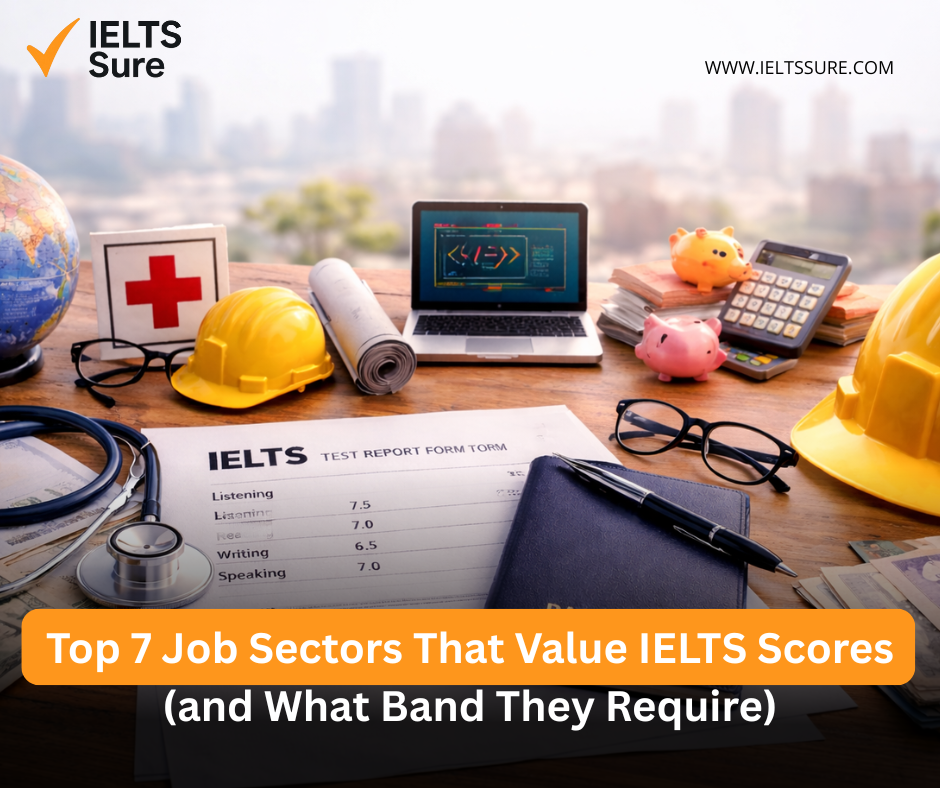
In this article, we will look at Job Sectors That Value IELTS. If you are planning to work abroad, your qualifications and experience matter. But in many industries, they are not enough on their own. Employers, regulators, and immigration authorities also need verified proof that you can work confidently in English.
That proof is often IELTS.
Different job sectors value IELTS in different ways, and the required band score can vary depending on the role, country, and level of responsibility. Below are the top 7 job sectors that value IELTS scores, with realistic examples of the band requirements you should expect.
JOIN OUR WHATSAPP GROUP FOR UPDATES
Table of Contents
Top 7 Job Sectors That Value IELTS
1. Medicine and Healthcare
Healthcare is one of the strictest sectors when it comes to English proficiency. Clear communication is essential for patient safety, teamwork, and professional accountability.
IELTS is commonly required for:
- Doctors
- Nurses
- Pharmacists
- Physiotherapists
- Care workers
Typical IELTS requirements:
- Overall Band: 7.0 – 7.5
- Often no band below 7.0, especially in Speaking and Writing
Professional bodies and health councils in countries such as the UK, Australia, Canada, and New Zealand rely heavily on IELTS scores before granting licenses.
In healthcare, IELTS is not just about employment. It is about professional registration.
ALSO READ: Get a Job Abroad: 7 Ways IELTS Helps You
2. Engineering and Technical Professions
Engineering roles value technical expertise, but communication is still critical. Engineers must write reports, explain designs, participate in meetings, and follow safety procedures.
IELTS is commonly required for:
- Civil engineers
- Mechanical engineers
- Electrical engineers
- Skilled technical workers
Typical IELTS requirements:
- Overall Band: 6.0 – 6.5
- Some migration pathways may accept 6.0, while professional registration may require higher
For engineers applying through skilled migration programmes, IELTS scores often contribute points toward visa eligibility.

3. Information Technology (IT) and Tech
The tech sector is globally mobile and highly competitive. While some tech companies focus more on skills, IELTS still plays an important role for visas, relocation, and international employment.
IELTS is valued for:
- Software developers
- Data analysts
- IT consultants
- Cybersecurity professionals
Typical IELTS requirements:
- Overall Band: 6.0 – 6.5
- Some employers may accept 6.0, but immigration systems may demand more
Strong Speaking and Listening scores are especially important for teamwork, meetings, and client communication.
4. Finance, Accounting, and Business
Finance and business roles require accuracy, clarity, and professional communication. Miscommunication in this sector can have serious consequences.
IELTS is often required for:
- Accountants
- Auditors
- Financial analysts
- Business consultants
Typical IELTS requirements:
- Overall Band: 6.5 – 7.0
- Writing is particularly important due to reports and documentation
Professional accounting bodies and employers may require IELTS for certification, registration, or international placements.
5. Education and Teaching
Teaching and education roles place heavy emphasis on English proficiency. Teachers must communicate clearly, manage classrooms, and assess students accurately.
IELTS is commonly required for:
- Primary and secondary school teachers
- ESL / EFL teachers
- University lecturers
Typical IELTS requirements:
- Overall Band: 7.0 – 7.5
- Often 7.0 in each skill, especially Speaking and Writing
In many countries, education authorities will not approve teaching licenses without meeting IELTS requirements.
6. Hospitality, Tourism, and Customer Service
Hospitality roles rely heavily on spoken English. Employers want staff who can interact confidently with international customers.
IELTS is valued for:
- Hotel staff
- Restaurant managers
- Front desk officers
- Tourism professionals
Typical IELTS requirements:
- Overall Band: 5.5 – 6.0
- Emphasis on Speaking and Listening
While requirements may be lower than professional sectors, IELTS still helps with work visas and employer trust.
7. Skilled Trades and General Employment
Many general work and trade roles still require IELTS, especially for migration and visa purposes.
This includes:
- Construction workers
- Technicians
- Care assistants
- Warehouse and logistics roles
Typical IELTS requirements:
- Overall Band: 5.0 – 6.0
- Usually IELTS General Training
Even when employers do not ask directly, immigration systems often do.
Concluding Thoughts on Job Sectors That Value IELTS
IELTS requirements vary, but one thing is clear:
The higher the responsibility and regulation of the job, the higher the IELTS score required.
Understanding the expectations of your target job sector helps you:
- Choose the right IELTS test
- Set realistic band score goals
- Prepare strategically instead of blindly
At IELTSsure, we focus on helping candidates prepare for the IELTS score their career actually needs, not just passing the exam.
Your job sector determines your score target.
Preparation turns that target into a result.