


IELTS Speaking Part 1 is often described as the easiest section of the speaking test, yet many candidates lose valuable marks here. This part sets the tone for the entire interview and strongly influences the examiner’s first impression. With the right mindset and approach, you can use Speaking Part 1 to demonstrate confidence, fluency, and natural English from the very beginning.
At IELTS Sure, we teach students how Band 9 candidates think, respond, and manage this section with ease.
JOIN OUR WHATSAPP GROUP FOR UPDATES
Table of Contents
What Is IELTS Speaking Part 1?
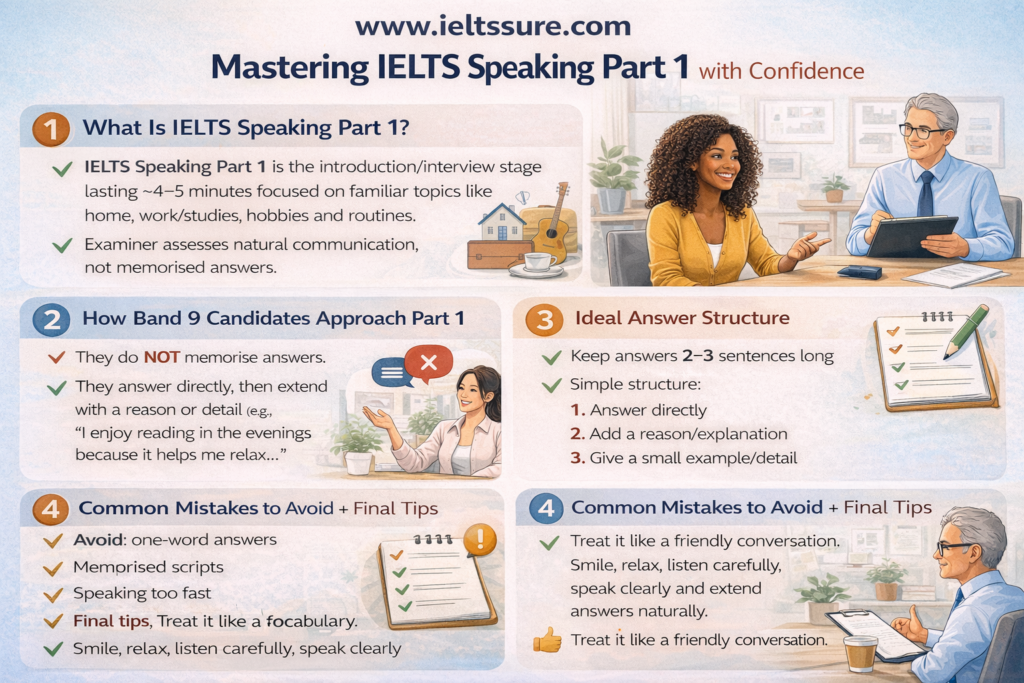
Speaking Part 1 is the introduction and interview stage of the test. It lasts about four to five minutes and focuses on familiar topics such as home, work, studies, hobbies, daily routines, and preferences.
The examiner is not testing your knowledge, they are assessing how naturally and clearly you can communicate simple ideas in English.
How Band 9 Candidates Approach Part 1
High scoring candidates do not memorise answers or speak in long, rehearsed paragraphs. Instead, they sound relaxed, natural, and conversational.
They answer directly, then extend their responses slightly with a reason, detail, or example. This shows fluency without overcomplicating the answer.
For example, instead of saying:
“I like reading.”
A stronger response would be:
“I enjoy reading in the evenings because it helps me relax after a long day, especially novels and biographies.”
This small extension immediately raises your score.
ALSO READ: Mastering IELTS Speaking: A Band 9 Strategy Guide For Achieving Your Dream Score
Ideal Answer Length in Speaking Part 1
One of the most common mistakes is giving answers that are too short or too long. Band 9 speakers usually give answers that are two to three sentences long.
Use this simple structure:
| Step | What to Do |
|---|---|
| 1 | Answer the question directly |
| 2 | Add one reason or explanation |
| 3 | Include a small example or detail |
This structure keeps your answers natural and well balanced.
Use Natural Language, Not Memorised Phrases in IELTS Part 1
Examiners can easily detect memorised answers. Using overly formal or complex phrases can actually lower your score.
Band 9 candidates use natural, everyday English, contractions, and common expressions. They sound like real people having a conversation, not students giving a speech.
Instead of saying:
“I am extremely enthusiastic about my occupation.”
Say:
“I really enjoy my job because it keeps me busy and motivated.”
Common Topics and How to Handle Them
Speaking Part 1 topics repeat frequently. Preparing ideas for common themes helps you feel calm and confident on test day.
Typical topics include:
| Topic | What Examiners Want |
|---|---|
| Home | Clear descriptions and comfort with basic vocabulary |
| Work or Study | Simple explanations and opinions |
| Hobbies | Ability to explain likes and routines |
| Daily Life | Fluency when discussing habits |
You do not need advanced vocabulary, you need clarity and control.
Mistakes That Lower Scores in Part 1
Many candidates lose marks without realising it. Avoid these common problems:
- Giving one word answers
- Memorising scripted responses
- Speaking too fast due to nerves
- Overthinking simple questions
- Using unnatural vocabulary
Band 9 performance is calm, clear, and controlled.
Final Tips from IELTS Speaking Part 1
Treat Speaking Part 1 like a friendly conversation, not an exam. Smile, relax, and listen carefully to the question. Speak clearly, extend your answers naturally, and stay focused on communication rather than perfection.
If you start strong in Part 1, your confidence will carry through the rest of the speaking test.
JOIN OUR WHATSAPP GROUP FOR UPDATES
Frequently Asked Questions About IELTS Speaking Part 1
IELTS Speaking Part 1 lasts approximately four to five minutes. During this time, the examiner asks questions about familiar topics such as your home, work, studies, hobbies, and daily routines.
Ideally, your answers should be two to three sentences long. This allows you to answer the question clearly and add a brief explanation or example without sounding rehearsed.
It is considered the easiest part in terms of content, but many candidates lose marks by giving very short answers or sounding unnatural. Strong communication skills are still essential.
No. Examiners can easily recognise memorised responses. Natural, spontaneous answers using simple and clear English score much higher.
Yes. Speaking Part 1 creates the examiner’s first impression and directly influences your confidence and fluency throughout the rest of the test.